Sinopsis
RadioBio is a podcast where UC Merced biology graduate students talk with seminar speakers for 30-45 minutes. Topics in biology will range widely, from molecules to ecosystems. Our target audience is anyone interested in science and biological research.
Episodios
-
![Dr. Amelia Lindsey: The Microbial World (with Wolbachia)]()
Dr. Amelia Lindsey: The Microbial World (with Wolbachia)
13/12/2021 Duración: 25minWhat if I were to tell you that you had hundreds, if not thousands of microbes living on you hands, you would probably respond with ewwwwww...gross and immediately want to sanitize or wash our hands. If I were to tell you that not all of them are bad, but rather most of them are good, you might still be skeptical. Let’s take it one step further. What if I told you that we can use naturally occurring bacteria as a form of pest control. Wild right! One of these bacteria is Wolbachia. Wolbachia affects the reproductive system in certain insects and can make them sterile. The cool part is that Wolbachia do not affect humans or other large invertebrates, but it does infect many insects that we classify as pests. Today we explore the world of Wolbachia and learn about how these little bacteria can kick some insect pest butt with Dr. Amelia Lindsay......This is RadioBio!
-
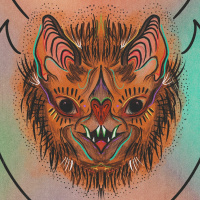
![Dr. Alexa Sadier: Fantastic Bats and Where They Live]()
Dr. Alexa Sadier: Fantastic Bats and Where They Live
14/11/2021 Duración: 29minBats are vital for maintaining balance in the ecosystems they are a part of: Bats keep insect populations in check, pollinate flowers, and disperse seeds. Bats are also an incredibly diverse group of species that come in all shapes and sizes! Did you know, that if you randomly picked a mammal, you would have a one in five chance of picking a bat? Today we have Dr. Alexa Sadier with us to talk about what studying bats can teach us about evolution.
-
![Dr. Arun Sethuraman: Population genomics]()
Dr. Arun Sethuraman: Population genomics
30/10/2021 Duración: 28minImagine the world 430,000 years ago. What were our ancestors like? What if there was a population of people that no one ever knew about? Can we unravel the mystery of our history? Now imagine, your garden at home is full of aphids. Did you go buy some ladybugs at your local home depot? Have you ever thought where those ladybugs came from or what happens after they leave? Now these two situations may seem very different but they have one common theme. They both have questions that can be studied using population genomics. This week on RadioBio we talk about popgen, ancient humans, ladybugs and ghost populations (ooo spooky!) with Dr. Arun Sethuraman, an assistant professor at San Diego State University.
-
![Chapter 5: Mental Health w/ Dr. Gonzalez]()
Chapter 5: Mental Health w/ Dr. Gonzalez
03/09/2021 Duración: 26minThroughout this historic pandemic, there have been many changes to our social and work environments that have been far from our baseline. Work from home, has led to greater isolation and less ability to socialize with our coworkers and friends. This has undoubtedly affected the mental health of people all over the world, and this topic came up during chapter 4 of our COVID interview series, when Dr. Allen spoke about the mental health crisis emerging in Mariposa due to the stress of this pandemic. This inspired us to reach out to a mental health professional, specifically Dr. Tania Gonzalez, our very own director for Counseling and Psychological Services (or CAPS) at UC Merced. In this interview, we delve into the mental health impacts of this pandemic on undergraduate and graduate students at UC Merced, and the importance of maintaining laughter and routine as we come out of this experience. This is chapter 5 of our COVID interview series, in which we interview a series of professionals on different topics r
-
![Chapter 4: Public Health w/ Dr. Allen]()
Chapter 4: Public Health w/ Dr. Allen
02/09/2021 Duración: 26minAll over the news, we hear about drug development and vaccines, masks wearing, and being in a red or purple tier, but have you considered how this is affecting communities, maybe your community? In this interview with Dr. Kristina Allen, Deputy Director of Public Health from Mariposa county, we discussed coordinated response to the COVID-19 outbreak as well as the mental state of communities that have been affected by COVID-19, and how local governments and rural areas are fighting to keep their community alive. This is chapter 4 of our COVID interview series, in which we interview a series of professionals on different topics related to the pandemic. Tune in for our next chapter, an interview with Dr. Tania Gonzalez, the director for counseling and psychological services (CAPS) at UC Merced , on her experiences with the pandemic!
-
![Chapter 3: Doctors in the Pandemic w/ Dr. Zweifler]()
Chapter 3: Doctors in the Pandemic w/ Dr. Zweifler
01/09/2021 Duración: 23minCOVID 19 has changed so many things about the world we live in, but few things have changed as much as our perceptions of public health and its role in our modern society. How has the US reacted to COVID 19, and what things could we have done better? What if our social services and health services could be better integrated? How does testing and contact tracing actually happen to monitor the transmission of coronavirus? Today, we answer all of these questions and more by talking with Dr. Zweifler, a medical consultant from the Fresno County Health Department. This is chapter 3 of our COVID interview series, in which we interview a series of professionals on different topics related to the pandemic. Tune in for our next chapter, an interview with Dr. Kristina Allen, Deputy Director of Public Health with Mariposa county, on her experiences with the pandemic!
-
![Chapter 2: Doctors in the Pandemic w/ Dr. Gaeta]()
Chapter 2: Doctors in the Pandemic w/ Dr. Gaeta
31/08/2021 Duración: 26minThis past year, we have been in the midst of a historical pandemic that has touched the lives of everyone around us. As part of our interview series on COVID-19, our team was interested in gaining the perspective of a medical doctor and how this pandemic has affected healthcare workers. For this episode, we interviewed Dr. Xavier Gaeta, a doctor currently in pediatric residency in a LA county, as well as a PhD. Dr. Gaeta gave us invaluable perspective on being a doctor during the pandemic and insight into the differential impacts of COVID on children versus adults. This is chapter 2 of our COVID interview series, in which we interview a series of professionals on different topics related to the pandemic. Tune in for our next chapter, an interview with Dr. John Zweifler, a medical consultant with the Fresno county Health Department, on his experiences with the pandemic!
-
![Chapter 1: Vaccines Drug Development w/ Dr. Davey]()
Chapter 1: Vaccines & Drug Development w/ Dr. Davey
30/08/2021 Duración: 28minVaccines and drugs to mitigate sickness have become a central part of modern life, and they have become a central topic right now as the COVID 19 pandemic has progressed. But how are vaccines developed? What is the difference between a vaccine and therapeutic drugs? And could we actually one day treat coronavirus with a pill? Today, we talk to Dr. Robert Davey, a professor of microbiology from Boston University, who is currently working on ways to find treatments for dangerous viruses. This is chapter 1 of our COVID interview series, in which we interview a series of professionals on different topics related to the pandemic. Tune in for our next chapter, an interview with Dr. Gaeta, a pediatric resident, on his experiences with the pandemic!
-
![Dr. Ashkaan Fahimipour: Ecological networks]()
Dr. Ashkaan Fahimipour: Ecological networks
22/05/2021 Duración: 29minLife is complicated. Breaking down the living world into understandable pieces requires good experiments AND good theories. Science thrives on the feedback between theory and data. Our guest today specializes in connecting theories and models to empirical data from experiments. Join us for a fascinating discussion of ecological models, ecological experiments, and everything in between!
-
![Dr. Orion Weiner]()
Dr. Orion Weiner
18/05/2021 Duración: 22minIt can be hard to make decisions, but do you know that your cells makes decisions too? What is even more amazing is that we can actually watch cells do this. This week we discuss cells and how they communicate and understand each other with Dr. Orion Weiner from the UCSF Cardiovascular Research Institute.
-
![Dr. Noah Whiteman: Coevolution and Insects]()
Dr. Noah Whiteman: Coevolution and Insects
24/04/2021 Duración: 28minHave you ever wondered what's the difference between a bug and an insect? Are spiders even an insect? Wait are lobsters and crabs related to bugs? Why do we even care about these insects and parasites? Well, we all know that bees are important for our food because they pollinate many of our plants that produce food for us, but insects have lead to many other discoveries. Did you know that many human genes that have been shaped by Darwinian evolution are genes that are involved with dealing with viruses and large parasites? Crazy right? Well today, we dive into Dr. Whiteman's work that follows Darwin and Wallace discoveries which is focused on evolution of new traits that are shaped though interactions between organisms. This is Radio Bio!
-
![Dr. Rima McLeod]()
Dr. Rima McLeod
30/03/2021 Duración: 24minHave you ever wondered why pregnant women shouldn't change the litter box? How about why your meat should always be well cooked? Well, one of those reasons is Toxoplasma gondii. Over 2 billion people are infected with this brain parasite. However, our understanding of the effects of Toxoplasma on humans, especially on their brain are small. Almost as small as the parasite itself. This week on RadioBio, we discuss who gets this parasite, what we can do to prevent or treat it and an introduction into the research taking place to discover the role of this parasite in the body with Dr. Rema McLeod from the University of Chicago. This is RadioBio.
-
![Dr. Rachel Bay]()
Dr. Rachel Bay
09/03/2021 Duración: 24minHumans might be the worlds greatest evolutionary force. From pollution to deforestation, human induced changes have a huge impact on the environment around us. But how are animals adapting to the changes in their environment? This week on RadioBio, we talk with Dr. Rachel Bay from the University of California, Davis about her work investigating evolutionary genomics in an ever-changing world.
-
![Richard Locksley: Allergies and Immunity]()
Richard Locksley: Allergies and Immunity
19/02/2021 Duración: 26minAchoo! Ah, allergies, the first sign of spring or also a sign that the barista accidentally did make your coffee with whole milk instead of soy. But what is your body doing during an immune response? Particularly, an allergy immune response. And why are your cells causing you so much misery? Well, join us this week as we dive into the fascinating roles that our immune system plays during allergic responses with Dr. Richard Locksley.
-
![Dr. Rachel Meyer]()
Dr. Rachel Meyer
05/02/2021 Duración: 25minDNA is all over the place. It sheds from everything, everywhere, throughout time. What if you could just scoop it up and figure out what it is... well, we can! Environmental DNA, or eDNA, is DNA that's left over in the environment and is an important tool we can use to understand life as we know it. This week on RadioBio, we talk with Dr. Rachel Meyer from UC Santa Cruz all about eDNA-- how you collect it and what you can do with it, and even how you can get involved. This is RadioBio.
-
![Dr. Devavani Chatterjea]()
Dr. Devavani Chatterjea
13/11/2020 Duración: 25minSpring and Fall are often accompanied by a chorus of sneezes-- allergies are the bane of this beautiful time! Allergies, our immune system’s response to foreign substances, can be more than uncomfortable-- long term exposure to allergens can be linked to chronic pain. This week on RadioBio We talk with Dr. Devavani Chatterjea from McAlaster College about her work investigating the link between allergies and chronic pain.
-
![Fire and Fungi: Dr. Sydney Glassman]()
Fire and Fungi: Dr. Sydney Glassman
30/10/2020 Duración: 21minEver wonder what it takes for a forest to regenerate after a devastating wildfire? Turns out microscopic fungi in soils play a big role in that recovery. These fungi partner up with all kinds of plants, helping out in many environments and industries, from helping crops to flourish to restoring plant biodiversity. Join us as we discuss these topics and more with Dr. Sydney Glassman. This is RadioBio.
-
![Dr. Roberto Andresen Eguiluz: Molecular Machines and Mechanisms]()
Dr. Roberto Andresen Eguiluz: Molecular Machines and Mechanisms
16/10/2020 Duración: 27minFrom gummy bears to cars we learn the importance of adhesion and lubricants for everyday life. Whether you're a muscle on a rock trying to hold on during high tide, or you're a runner and relying on the lubricants to keep your knees moving. The research that is conducted to understand these phenomenon can help us fix issues in health care that many of us suffer from, such as arthritis or joint damage from injuries. Today, we will explore the concepts of adhesion and lubricants that are all around us with this weeks guest Dr. R. A. Eguiluz. This is Radio Bio!
-
![Dr. Roberta Pelanda]()
Dr. Roberta Pelanda
02/10/2020 Duración: 24minThe immune system is complex, full of lairs of communication and strict regulation, all to keep us healthy and alive. But what happens when those checkpoints break down? In this weeks episode, we learn about how B-cells can turn against us and what that means. We talk to Dr. Roberta Polenda from University Colorado, Denver about her research on this subject.
-
![Homeostatic Regulation in the Brain: Dr. Dion Dickman]()
Homeostatic Regulation in the Brain: Dr. Dion Dickman
15/05/2020 Duración: 25minHave you ever thought about brains? Our brains are seriously important, that's not news, but how do they actually work? There is a delicate balance between order and chaos. RadioBio this week is all about stability in the brain. Hopefully by the end you'll know a little bit more about how your brain works!