Sinopsis
RadioBio is a podcast where UC Merced biology graduate students talk with seminar speakers for 30-45 minutes. Topics in biology will range widely, from molecules to ecosystems. Our target audience is anyone interested in science and biological research.
Episodios
-
![RadioBio Interviews Dr. Otger Campas]()
RadioBio Interviews Dr. Otger Campas
03/01/2018 Duración: 38minHow do cells interact with their physical environment? Dr. Otger Campas from the University of California, Santa Barbara joins RadioBio to discuss the physical properties of cells and how the interactions between cells and their environment shape cell and organism development.
-
![RadioBio Interviews Dr. Embriette Hyde]()
RadioBio Interviews Dr. Embriette Hyde
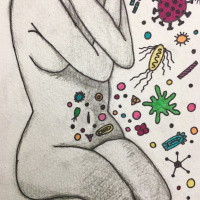
20/12/2017 Duración: 25minYou may have heard about the human microbiome or even the pro-biotic fad, but how much do you really know about the micro-organisms that live on and in you? Dr. Embriette Hyde from UC San Diego discusses her work with the American Gut Project on understanding the world of human microbiome. This work could lead to advances in our understanding of both the human health and human disease.
-
![RadioBio interviews Dr. Marie-Claire Chelini]()
RadioBio interviews Dr. Marie-Claire Chelini
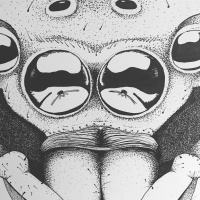
06/12/2017 Duración: 24minHave you ever wondered why males and females of a species are different sizes, shapes, and colors? Dr. Marie-Claire Chelini, University of California Presidential Post-doctoral Fellow, discusses her research on the evolution of sexual size dimorphism in crab spiders.
-
![RadioBio interviews Dr. Zachary Knight]()
RadioBio interviews Dr. Zachary Knight
22/11/2017 Duración: 27minEveryone knows what hunger feels like and understands the drive to seek food when hungry, but how does it work? Dr. Zachary Knight from UCSF joins RadioBio to discuss his work on understanding the pathways in the brain that sense hunger to drive behavior. Knight's work is revealing new insights into how the brain makes decisions about food, whether it looks tasty, and how hunger dictates behavior. These results could lead to important advances in our understanding of eating disorders.
-
![RadioBio interview Dr. Aaron Gitler]()
RadioBio interview Dr. Aaron Gitler
08/11/2017 Duración: 30minHow do misfolded proteins cause human neurodegenerative diseases, like Alzheimer's, ALS, and Parkinson's? The Gitler lab at Stanford University studies the cellular biology underlying protein-misfolding diseases using the model organism yeast. Since dealing with misfolded proteins is an evolutionary problem, they hypothesize that the mechanisms employed to cope with misfoldings is likely conserved from yeast to humans. Gitler's long-term goal is to identify the critical genes and cellular pathways affected by misfolded human disease proteins.
-
![RadioBio interviews Dr. Kathleen Ferris]()
RadioBio interviews Dr. Kathleen Ferris
25/10/2017 Duración: 33minEvolution; no small topic. Biologists can use a diverse array of systems to try to test evolutionary concepts. Some systems, like bacteria, are useful for looking at how evolution happens in real time, because they have such short generation times. Others, like animals, are much more difficult, but can allow us to ask really interesting questions like how behavior influences evolutionary processes. Dr. Kathleen Ferris, asks questions about how organisms respond to stress in an evolutionary sense using two very different systems.
-
![RadioBio interviews Dr. Daniel Weinrich]()
RadioBio interviews Dr. Daniel Weinrich
05/07/2017 Duración: 32minHow does antibiotic resistance evolve? In this week's episode, Dr. Dan Weinreich joins RadioBio to discuss gene evolution and how it can lead to antibiotic resistance!
-
![QSB RadioBio interviews Dr. Jack Sites]()
QSB RadioBio interviews Dr. Jack Sites
14/06/2017 Duración: 29minEver wonder where species come from? Do species even exist? Why do they matter? RadioBio discusses the speciation process through space and time with Dr. Jack Sites Jr.
-
![QSB RadioBio interviews Dr. Johanna Schmitt]()
QSB RadioBio interviews Dr. Johanna Schmitt
30/05/2017 Duración: 33minClimate change can cause organisms to experience conditions they are not adapted to. How do these organisms respond and keep up with a changing world? Our guest this week studies how a small, ubiquitous plant responds to both natural and experimental climate change to learn about the potential pathways to adaptation plants may follow. Dr. Johanna Schmitt introduces us to Arabadopsis thaliana, a tiny weed that can yield big insights into what the future holds for plants.
-
![QSB RadioBio interviews Dr. Rob Spitale]()
QSB RadioBio interviews Dr. Rob Spitale
13/05/2017 Duración: 41minIn many cells, RNA plays an essential role in regulation. Technological innovations are needed to further understand the role of RNA molecules in regulating basic biological function. Further, there is a need to expand the biochemistry toolkit to understand how large groups of RNAs are working in parallel inside living cells. The Spitale lab develops novel biochemical approaches toward understanding the role of RNA molecules in normal cell biology, as well as disease. Today we are going to learn about these new methods and tools in the RNA world from our guest Dr. Spitale himself.
-
![QSB RadioBio interviews Dr. Chris Amemiya]()
QSB RadioBio interviews Dr. Chris Amemiya
29/04/2017 Duración: 30minWhat are coelacanths? Why would a marine fish contain chitin, a sugar that makes up the exoskeleton of insects? How do sharks sense fish? Why do we care about lamprey immune systems? Dr. Chris Amemiya from the Benaroya Research Institute studies these questions using comparative genomics. This research will improve our understanding of marine ecology as well as immunology, and holds implications for both the medical and biotechnical fields.
-
![QSB RadioBio interviews Dr. Emily Jane McTavish]()
QSB RadioBio interviews Dr. Emily Jane McTavish
12/04/2017 Duración: 36minThe famous geneticist Theodosius Dobzhansky once said, "Nothing in biology makes sense except in the light of evolution." But how do we study evolution? How do we reconstruct evolutionary relationships amongst hundreds, even thousands of taxa across the tree of life? Can we really predict how fast species evolve? Dr. Emily Jane McTavish, Assistant Professor in the Quantitative & Systems Biology graduate group at the University of California, Merced, joins us to talk about her research as a phylogeneticist and computational biologist.
-
![QSB RadioBio interviews Dr. Nathan Lannning]()
QSB RadioBio interviews Dr. Nathan Lannning
14/03/2017 Duración: 33minQSB RadioBio interviews Dr. Nathan Lanning of CSU-LA.